
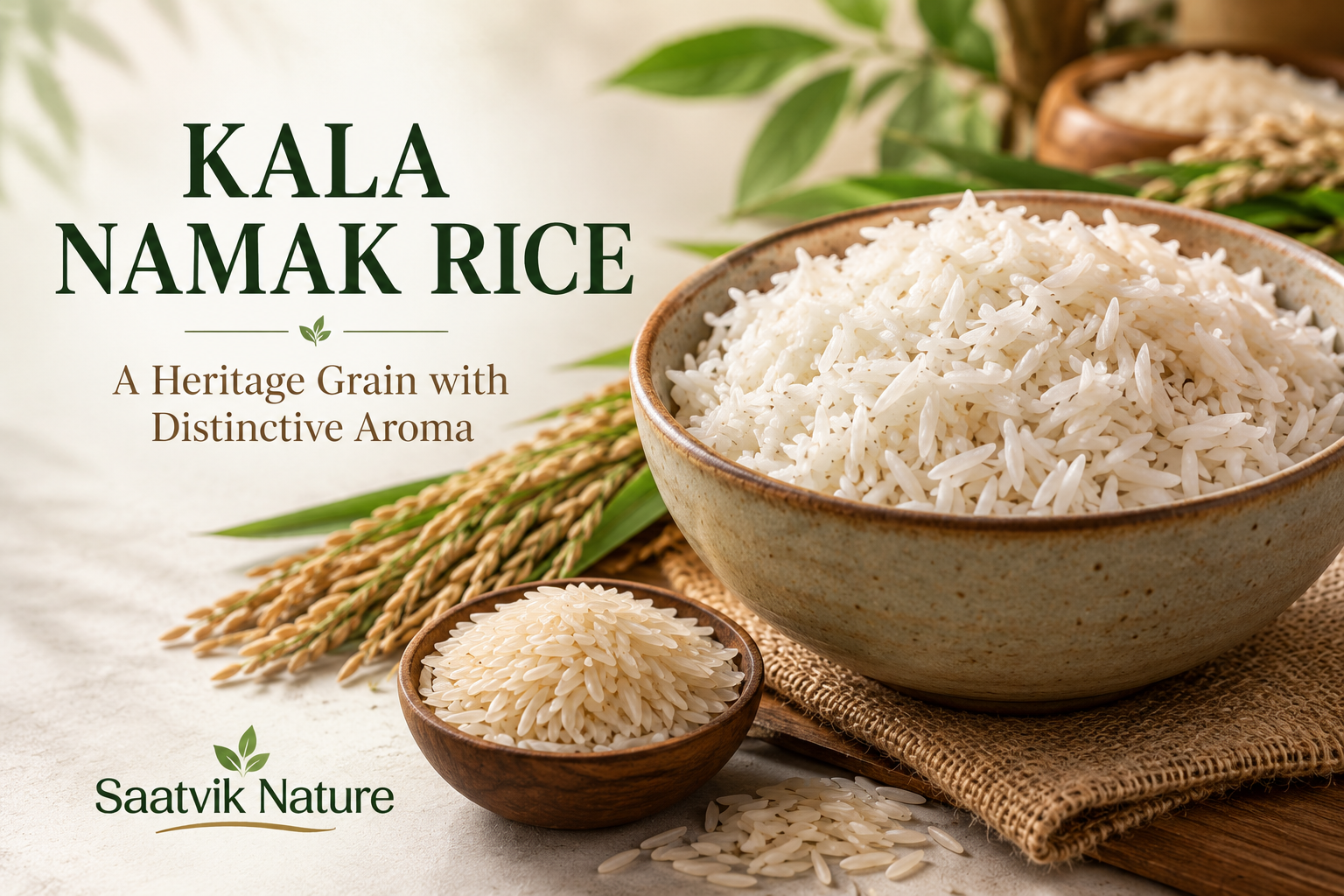
India’s food heritage is filled with grains that tell a story of local farming, traditional cooking and regional culture. Kala Namak rice is one such variety. Known for its distinctive aroma and connection to eastern Uttar Pradesh, this traditional rice offers a different experience from everyday rice varieties. For people who enjoy exploring regional foods, Kala Namak rice brings heritage and flavour to the table.
What Is Kala Namak Rice?
Kala Namak rice is a traditional aromatic rice variety associated especially with the Terai region of eastern Uttar Pradesh, including Siddharthnagar and nearby districts. It is also popularly known as Buddha Rice because of its cultural and historical associations with the region around ancient Kapilvastu. The name can be confusing: “kala” refers to the dark husk of the paddy, while the name does not mean that salt has been added to the cooked rice.
After milling and cooking, the rice has a light appearance and a characteristic fragrance that many people find earthy, warm and memorable. Its aroma is one of the qualities that distinguishes it from more familiar everyday varieties. Kala Namak rice also has a Geographical Indication (GI) identity connected to its traditional growing region, helping recognize its regional heritage.
Why Is Kala Namak Rice Special?
Alt text: A bowl of cooked Kala Namak rice with uncooked heritage rice grains
1. A distinctive natural aroma
The first thing many people notice about Kala Namak rice is its fragrance. When it cooks, the aroma can fill the kitchen and complement simple dishes. Because its flavour is distinctive, it can be enjoyed with dal, seasonal vegetables, curd or lightly seasoned preparations without needing an elaborate recipe.
2. A connection to Indian food heritage
Traditional grains preserve knowledge passed between generations of farmers and cooks. Kala Namak rice is closely linked to the agricultural traditions of eastern Uttar Pradesh. Choosing regional varieties can help keep interest in indigenous crops alive and introduce younger generations to the diversity of Indian food.
3. Versatile for everyday meals
Kala Namak rice can be served with everyday Indian meals as well as special dishes. Try it steamed with dal and vegetables, prepare a simple pulao, or use it in a comforting khichdi. Its aroma gives familiar meals a slightly different character.
4. A useful option for a varied diet
Rice is a source of carbohydrates that provide energy. Kala Namak rice can be included as one part of a varied diet alongside vegetables, pulses, protein-rich foods and healthy fats. Nutrient levels and cooking results vary by crop, milling and preparation, so check the product label for the most relevant information. No single rice variety replaces an overall balanced diet.
5. An opportunity to explore regional ingredients
Trying heritage grains can make home cooking more interesting. Kala Namak rice is a way to discover a regional food tradition while enjoying a grain that works with familiar recipes. It may be especially appealing to home cooks who value aroma, origin and variety in the ingredients they use.
How to Cook Kala Namak Rice
For a good result, begin by checking the cooking directions on the package because soaking time and water requirements can vary between rice batches and processing styles. As a general starting point, rinse the rice gently in clean water until the water is less cloudy. If the package recommends soaking, soak it for the stated time and drain.
Add the rice and the recommended quantity of water to a pot. Bring it to a gentle boil, then cover and cook over low heat until the grains are tender. Avoid stirring too frequently, as this can break the grains. Once cooked, let the rice rest, covered, for a few minutes and fluff it gently with a fork. Adjust the water and cooking time on your next attempt to suit your preferred texture.
Easy Ways to Serve It
- Steamed rice with dal, sabzi and a little ghee, if desired.
- Vegetable pulao with whole spices and seasonal vegetables.
- A comforting khichdi with lentils and mild spices.
- A simple rice bowl with curd, vegetables and chutney.
- A festive meal served alongside curry or a traditional regional dish.
For the best flavour, keep the seasoning balanced so that the rice’s natural aroma remains noticeable. Store uncooked rice in a clean, dry, airtight container away from moisture and strong odours.
What to Check When Buying Kala Namak Rice
When buying Kala Namak rice, look for clear product information about the variety, origin, pack size, packing date and storage instructions. If a seller makes claims about organic certification, GI origin or laboratory testing, look for the relevant details rather than relying on broad marketing phrases alone. Choose sealed packaging and a seller that provides accessible customer support and product information.
The exact appearance, fragrance and cooking texture can vary naturally between harvests and batches. Reading the product description and following the cooking directions can help set realistic expectations.
Discover Kala Namak Rice from Saatvik Nature
Saatvik Nature offers Natural Original Kala Namak Rice for people who want to explore this traditional aromatic grain. The brand’s product page provides current pack options and purchase details. Before ordering, review the available pack size, price, delivery information and product description so you can choose the option that suits your household.
Explore the product here: Saatvik Nature Natural Original Kala Namak Rice (https://saatviknature.com/product/kala-namak-rice/).
Frequently Asked Questions
Is Kala Namak rice the same as ordinary white rice?
No. Kala Namak rice is a traditional aromatic variety known for its distinctive fragrance and regional heritage. Its aroma and cooking characteristics can differ from common everyday rice varieties.
Does the name mean salt is added to the rice?
No. The name is associated with the dark husk of the paddy; it does not mean salt has been added to the cooked rice.
Can I use Kala Namak rice for daily meals?
Yes. It can be served with everyday dishes such as dal, vegetables and curry, or used in recipes such as pulao and khichdi. Follow the package cooking instructions for the best results.
Where can I buy Saatvik Nature Kala Namak rice?
You can review product details and available pack sizes on the official Saatvik Nature Kala Namak Rice product page (https://saatviknature.com/product/kala-namak-rice/).
Kala Namak rice is more than an ingredient: it is a taste of regional food heritage. With its distinctive aroma and versatility, it can bring a traditional touch to simple home-cooked meals. If you enjoy discovering India’s diverse grains, consider exploring Kala Namak rice from Saatvik Nature and finding your favourite way to serve it.